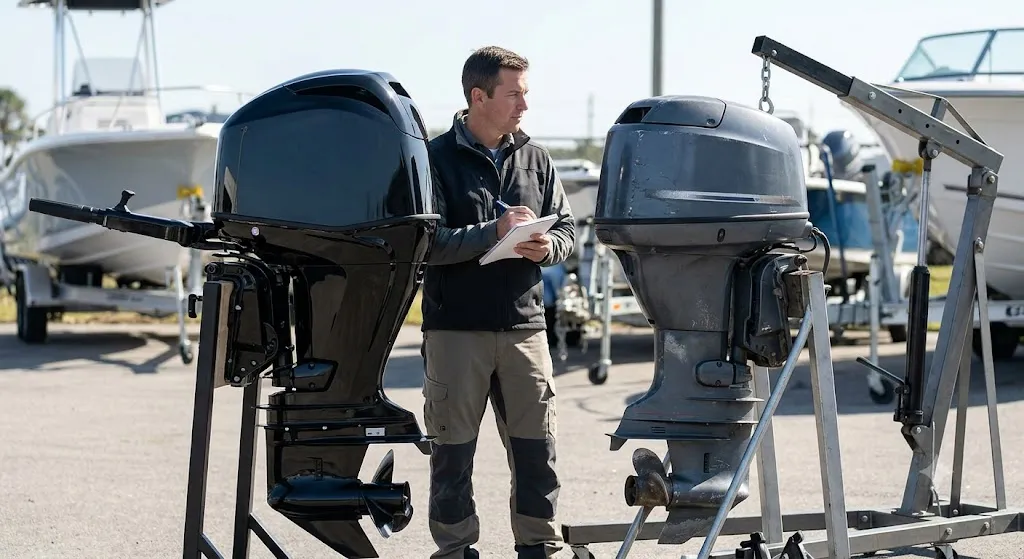
Every boater eventually faces the same question: spend more on something new, or save money with a pre-owned motor? There is no universal answer, only the right answer for your situation. If a Mercury outboard is already on your radar, this decision framework will help you weigh the trade-offs without second-guessing yourself later.
Start With Your Real Budget
List what you can spend, then subtract the extras: propeller, controls, rigging, registration, and a safety cushion. The sticker price is rarely the full cost, and surprises hurt far more when money is already tight.
Once you know the true number, the new-versus-used question often answers itself. A realistic budget keeps you from stretching into something you cannot comfortably support once fuel, storage, and maintenance start arriving month after month. Nobody enjoys a nasty surprise a month after buying.
The Case for Buying New
A new engine arrives with a full warranty, zero hours, and the latest efficiency improvements. You know exactly how it has been treated, because nobody has treated it yet. That certainty is hard to match on the used market. Warranty coverage also adds a layer of reassurance.
This peace of mind matters if the boat is your main source of weekend enjoyment. It also lets you plan maintenance from day one, building a clear service history that supports resale value when it is time to move on.
The Case for Buying Used
A pre-owned engine can cost far less, leaving room in the budget for a better boat, trailer, or electronics. A well-kept unit with moderate hours can run strongly for many more seasons without any drama.
The trade-off is uncertainty. You inherit someone else’s habits, good or bad. Careful inspection and a stack of maintenance records can turn that uncertainty into an informed, manageable risk instead of a gamble. Always ask to hear it run before agreeing to a price.
Hours, Age, and Condition Compared
Low hours sound ideal, but an engine that sat unused for years can hide its own problems, from stale fuel residue to dried seals. Regular use with good care often beats long idle storage in a damp shed. Neglect shows up in the details, so look closely.
Look at the whole picture: age, hours, storage conditions, and service paperwork. A ten-year-old motor with tidy records can be a better bet than a younger one with no history at all behind it.
Where to Compare Your Options
Browsing trusted listings of outboard motors for sale lets you compare new options against your used shortlist in one sitting. Seeing current prices anchors your expectations and stops you from overpaying for a tired older model with a hopeful price.
Use that research as a negotiating tool. If a used seller wants nearly the price of a new unit, the numbers will tell you to walk away. Informed buyers rarely feel pressured, and they almost always get a fairer deal. A moment of patience here prevents a long afternoon of regret.
Think About Resale Value
Every engine will eventually leave your boat, so consider what it might fetch later. Newer, popular models in good shape hold value well. Obscure or neglected ones can be surprisingly difficult to sell, even at a heavy discount.
Keep receipts, service logs, and original paperwork in a single folder. A tidy file shows the next buyer that the engine was loved. That small habit can add real money to your asking price when the day comes. Good records are quietly one of the most valuable features.
Making the Final Call
Ask three questions: Can I afford the engine and its upkeep? Do I trust its history? Will it meet my needs for the next five years? If the answers are all yes, you are standing on solid ground.
Whichever route you choose, commit with confidence and enjoy the water. A sensible decision made on good information beats a rushed bargain every single time, and it leaves you free to focus on the fun part.
Conclusion
Whether the engine is new or used, verify the serial number against the documents you receive. Ask for a bill of sale, and confirm there are no liens attached. Clean paperwork protects you from stolen goods and future ownership disputes.
For used units, request maintenance receipts and any warranty transfer details. A seller who happily provides records usually has nothing to hide. Hesitation or vague answers are your signal to slow down, ask harder questions, or walk away.
